

Don't know what to do ?
Get Free Counseling
Last Updated 02 September 2026
Portugal Job Market: Trends and Opportunities
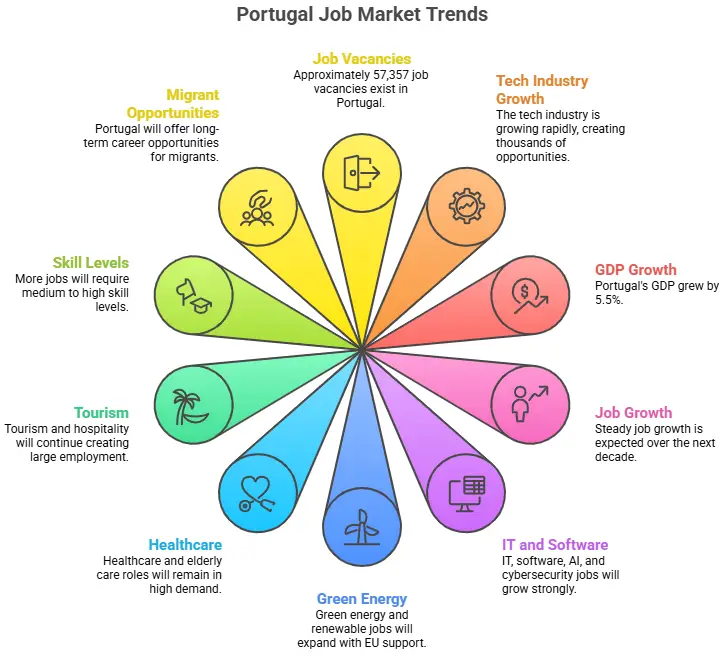
- There are over 57,000 job vacancies in Portugal, according to recent labour market data (Eurostat/INE) across sectors including healthcare, technology, finance, and engineering.
- The tech industry is growing rapidly giving scope for 1000s of opportunities
- GDP grew by 1.9% in 2025, with growth forecast to continue at a similar pace in 2026
- Portugal will see steady job growth over the next decade.
- IT, software, AI, and cybersecurity jobs will grow strongly.
- Green energy and renewable jobs will expand with EU support.
- Healthcare and elderly care roles will remain in high demand.
- Tourism and hospitality will continue creating large employment.
- More jobs will need medium to high skill levels.
- Portugal will offer long-term career opportunities for migrants.
Portugal, a beautiful country in Southern Europe, is known for its pleasant climate, scenic coastline, historic cities, and relaxed lifestyle. It is becoming a popular destination for professionals who want to work abroad. Portugal offers a stable economy, growing job opportunities, and a safe living environment. The country provides a positive work culture that values work–life balance, employee well-being, and equality. With affordable living costs, good healthcare, and a welcoming attitude toward foreign workers, Portugal is an attractive choice for long-term career growth.
*Looking to work in Portugal? Get top consultation from experts at Y-Axis.
Job Outlook in Portugal
Understanding the job outlook for job seekers and employers
Understanding the job outlook is important for both job seekers and employers in Portugal. The country is facing skill shortages in key sectors such as information and communication technologies, business support centres, healthcare, hospitality, agriculture, construction, and renewable energy. Because of this shortage, Portuguese companies are actively looking for skilled professionals. Foreign workers who have experience in these fields have a better chance of getting a Portuguese work visa and finding suitable jobs.
General employment trends
The COVID-19 pandemic changed the way people work in Portugal. Many employees started valuing work–life balance more than before. During the pandemic, companies adopted remote work to continue operations. As a result, remote and hybrid work became common in sectors like IT, customer support, and digital services. This shift led Portugal to introduce clear rules and regulations for remote work, making flexible working models more accepted. After recovering from the COVID-19 pandemic, Portugal’s labour market has improved. The unemployment rate is low, and job vacancies are high. Around 1.4% of employed positions are vacant, showing strong demand for workers. This indicates positive job growth and good opportunities for both local and foreign professionals.
In-Demand Industries and Occupations in Portugal
Portugal is seeing strong growth in several industries, leading to higher demand for skilled professionals. Digital transformation is changing the job market and creating new skills. Along with digital and technical knowledge, skills such as critical thinking and data handling are expected to be among the top 10 most important skills over the next 10 years. However, this shift is challenging because around 27% of residents have limited or no digital skills. Among unemployed people, this number rises to over 33%, increasing the need for skilled workers.
Long-term unemployment is also higher among older age groups. In 2021, about 27% of unemployed people aged 15 to 29 were without work for more than 12 months. This increased to 53% for those aged 45 to 49 and 59% for people aged 50 and above. These trends highlight why Portugal is focusing on reskilling, digital training, and attracting skilled foreign professionals to support growing industries.
In-demand Jobs in Portugal
The most in-demand occupations looking for highly skilled workers and their average salaries per year are listed below:
| Occupation | Average Annual Salary |
|---|---|
| IT and Software | €30,000 |
| Engineering | €28,174 |
| Accounting and Finance | €25,500 |
| Human Resource Management | €30,000 |
| Hospitality | €24,000 |
| Sales and Marketing | €19,162 |
| Healthcare | €19,800 |
| STEM | €38,000 |
| Teaching | €24,000 |
| Nursing | €25,350 |
Note: Portugal's national minimum wage is €920/month (2026), and the average gross salary across all sectors is approximately €19,000–21,000/year. Roles in IT, STEM, and Human Resource Management listed above pay well above this national average.
Portuguese salaries (including the minimum wage and most employment contracts) are paid across 14 instalments a year — 12 monthly payments plus a holiday bonus and a Christmas bonus. This is unfamiliar to most foreign job-seekers comparing salary offers and is currently unmentioned.
Most Portuguese salaries, including the figures above, are typically paid across 14 instalments per year — 12 monthly payments plus a holiday bonus (paid in summer) and a Christmas bonus — rather than the 12-payment structure common in India.
In-demand Skills in Portugal
Employers in Portugal look for professionals who have a mix of technical knowledge and soft skills. Along with role-specific skills, companies prefer candidates who can communicate clearly, adapt to change, work well in teams, and manage their time effectively. These skills help employees perform better at work and support long-term career growth in Portugal’s evolving job market.
| Job Sector | Key Skills in Demand |
|---|---|
| Information Technology (IT) | Digital skills, software knowledge, data handling, analytical thinking, problem-solving |
| Engineering | Technical expertise, problem-solving, analytical skills, adaptability, teamwork |
| Healthcare & Nursing | Communication skills, patient care, teamwork, adaptability, time management |
| Finance & Accounting | Analytical skills, attention to detail, critical thinking, financial reporting |
| Business & Management | Leadership skills, decision-making, communication, problem-solving |
| Marketing & Sales | Communication skills, creativity, digital marketing, customer engagement |
| Human Resources | Communication skills, people management, teamwork, problem-solving |
| Hospitality & Services | Customer service skills, communication, teamwork, time management |
| Education & Training | Communication skills, adaptability, leadership, critical thinking |
Identification of Key Skills Sought by Employers
Understanding what employers look for is important when applying for jobs. Many companies do not focus only on technical knowledge. They also value soft skills because these skills show how well a person can work with others and handle new situations. Skills such as communication, teamwork, adaptability, and problem-solving help employees perform better at work. Employers prefer candidates who can learn quickly, support their team, and contribute positively to the workplace environment.
Importance of Upskilling and Reskilling for Job Seekers
Upskilling and reskilling are important for career growth in today’s job market. Learning new skills helps candidates earn better salaries and access more job opportunities. It also helps them stay competitive as technology and job roles keep changing. By regularly upgrading skills, job seekers can improve their confidence, increase their chances of success, and build a strong and stable career in the long term.
Workforce Demands in Different States of Portugal
Portugal has different job opportunities across its regions. Tourism plays a major role in the economy, especially in coastal and popular cities. Many part-time and seasonal jobs are available in hotels, restaurants, and catering services. In recent years, the call centre industry has grown strongly, creating jobs for multi-lingual workers who speak English and other European languages. The automotive sector, construction, repair services, and maintenance jobs have also shown steady growth in several regions.
However, Portugal continues to face skill shortages in key sectors. Employers report a lack of skilled workers in communications, especially call centres, IT, healthcare, tourism and hospitality, and agriculture. These shortages create good opportunities for foreign professionals with the right skills and experience.
Impact of Technology and Automation in Portugal
Portuguese business culture focuses on building strong personal relationships. Many businesses are family-run, as family values play an important role in business decisions. Compared to some northern and central European countries, companies in Portugal may be less formal. Meetings are often personal, and decisions are usually made by senior management. Long business lunches are common and are sometimes held at a business partner’s home.
As technology and automation increase, companies face challenges in hiring skilled workers in ICT, healthcare, construction, hospitality, agriculture, business support centres, and renewable energy. While automation improves efficiency, it also increases the need for trained professionals who can work with new technologies.
*Want to apply for a Portugal Job Seeker Visa? Call Y-Axis at +91-7670800000 for complete assistance!
Remote Work and Flexible Jobs in Portugal
Remote work and flexible job options have become more common in Portugal, especially after the COVID-19 pandemic. Many companies shifted from traditional office work to remote or hybrid models for health and safety reasons. Today, remote work is widely accepted in sectors such as IT, customer support, digital services, and business operations. This change has helped employees value work–life balance more and manage their time better. For employers, remote work helps reduce office costs and allows them to hire skilled talent from different regions and countries. For employees, remote work reduces travel time, lowers stress, and provides flexibility in daily schedules. For employers, it improves productivity and employee satisfaction. Remote work is now regulated in Portugal, giving clarity on employee rights and responsibilities, making it a long-term and stable work option.
Future Job Growth and Skill Development Plans in Portugal
Portugal has shown strong progress in building a stable and growing job market. The country has one of the lowest unemployment rates in Europe, holding around 5.6–5.9% through 2026 — among its best readings in over two decades. This improvement is the result of government efforts to support job creation, especially in technology, start-ups, and innovation-driven industries. Many international companies are also choosing Portugal due to favourable tax policies and incentives for hiring. Portugal is investing in skill development, digital training, and education to prepare workers for future jobs. The tourism sector plays a major role in employment and accounts for around 10% of the workforce. With continued investment in technology, green energy, and services, job opportunities are expected to grow steadily in the coming years.
How Government Policies Shape the Job Market in Portugal?
Government policies strongly influence employment in Portugal. Investments in start-ups, digital transformation, and renewable energy have helped create new jobs. Supportive corporate tax laws and incentives encourage businesses to expand and hire more workers. Wage changes reflect the balance between job demand and workforce supply. When demand for workers is high, salaries increase, improving living standards. At the same time, higher wage costs can slow down hiring, helping maintain balance in the labour market. Overall, these policies aim to create a stable and sustainable job environment.
Challenges and Opportunities for Job Seekers in Portugal
Portugal offers many opportunities, but job seekers also face challenges. Technology companies often welcome international workers, but finding jobs in traditional industries can be difficult without knowing Portuguese. The job market differs for English-only speakers and those who speak Portuguese or other European languages. Competition for jobs can be strong, so early job searching is important. Non-EU candidates usually need a confirmed job offer before moving to Portugal.
Tips and Strategies for Navigating the Job Market Successfully
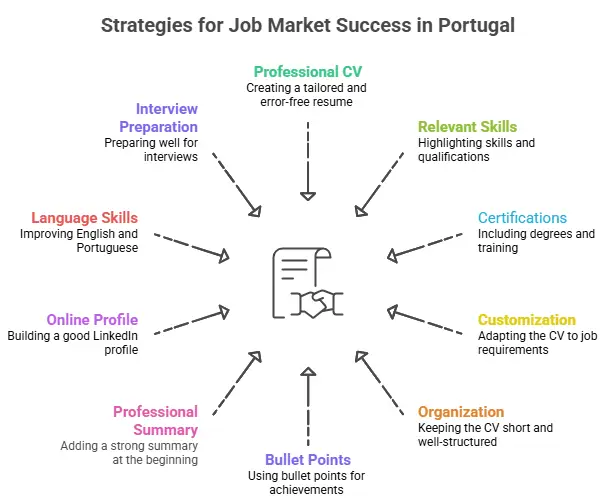
- Create a professional and updated CV for each job application
- Highlight relevant skills, qualifications, and work experience clearly
- Include certifications, degrees, and training programs
- Customize your CV based on job requirements
- Keep your CV short, well-organized, and error-free
- Use bullet points to show achievements and responsibilities
- Add a strong professional summary at the beginning
- Build a good online profile on LinkedIn
- Improve language skills, especially English and Portuguese
- Prepare well for interviews
Summary of Portugal Job Outlook
Before applying for jobs in Portugal, it is important to understand the job market and work culture. Portuguese companies value long-term relationships, teamwork, and trust. Face-to-face meetings are preferred over emails and calls. The standard workweek is 40 hours, spread across five days, with office hours usually from 9:00 a.m. to 6:00 p.m. With steady job growth, supportive policies, and a healthy work culture, Portugal offers good long-term career opportunities for professionals.
*Searching for Jobs in Portugal? Find the right one with the help of Y-Axis resume marketing services.
Y-Axis snapshot
1M
Successful applicants
1500+
Experienced counselors
25Y+
Expertise
50+
Offices
Don't know what to do ?
Get Free Counseling
Looking for Inspiration
Explore what Global Indians have to say about Y-Axis in shaping their future